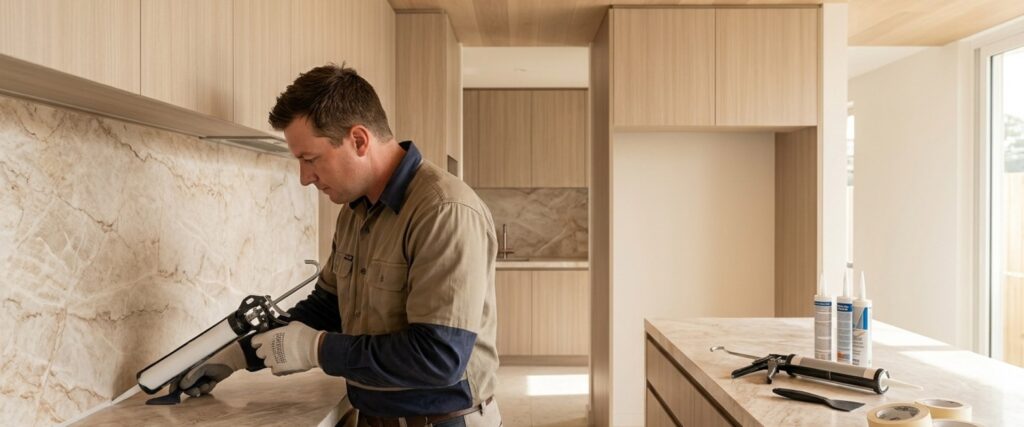
When it comes to maintaining the structural integrity and aesthetic appeal of your property, caulking rendered walls is a critical task that demands a specialist approach. Rendered facades, common across Sydney and greater NSW, require specific sealant treatments due to their unique material properties and exposure to environmental factors. This guide from Australian Caulking Experts delves into why render joints behave differently, the right sealants for the job, and when to engage a professional for optimal results.
Key Takeaways
- Render is an applied coating, not a structural substrate — its porosity, alkalinity and compound movement make general-purpose caulk a poor choice.
- Selecting the correct sealant type—silicone, polyurethane, or acrylic—is crucial, depending on the render type and joint requirements.
- Thorough surface preparation, including cleaning and priming, is essential for ensuring strong adhesion and sealant longevity on rendered surfaces.
- Homeowners can manage minor, accessible repairs, but extensive or high-rise render joint sealing typically requires professional expertise.
- Regular inspection and timely remedial caulking can significantly extend the lifespan of rendered facades and maintain their finish.
Caulking Rendered Walls
Rendered facades, whether on residential homes or commercial buildings, present unique challenges for joint sealing. Render is not a structural material — it is a relatively thin coating applied over a base wall. That distinction matters for three reasons that directly affect how sealant performs.
How Render Differs from Other Substrates
First, render is porous at a micro level. Cement render in particular contains a network of tiny capillaries that draw in sealant solvents. A general-purpose caulk applied without primer can lose its plasticisers into the render, curing brittle and pulling away from the joint within months. Second, cement-based renders are often highly alkaline when fresh, which can chemically attack sealant polymers not formulated for mineral substrates, causing discolouration and accelerated breakdown. Third, because render is bonded to a structural wall behind it, joints in render experience compound movement — the render itself expands and contracts with temperature, while the underlying masonry or framing moves independently. The sealant must accommodate both cycles simultaneously, which is why a rigid, general-purpose caulk cracks far sooner on render than it would on a single-material joint.
Thermal Movement and Cracking Patterns
Rendered surfaces, particularly those exposed to Sydney’s varying climate, undergo significant thermal movement. As temperatures fluctuate, the render expands and contracts. Without adequate allowance for this movement, stress concentrates at joints and interfaces, leading to common failures such as hairline cracks, delamination, and the breakdown of existing seals. This is especially true for large rendered panels or where render meets dissimilar materials like window frames or expansion joints.
Common Render Types and Their Impact on Sealant Choice
The type of render — whether smooth, textured or polymer-modified — also dictates the sealant requirements. Cement render, a traditional choice, is rigid and porous, often requiring a more flexible sealant with strong adhesion to mineral substrates. Acrylic render, known for its flexibility and colour retention, may benefit from sealants formulated for enhanced elasticity and UV stability. Hybrid renders combine properties, demanding sealants that offer a balance of adhesion, flexibility, and durability.
Effective render joint sealing isn’t just about applying caulk; it’s about understanding the material science behind render and selecting solutions that accommodate its dynamic nature and maintain aesthetic consistency.
Choosing the Right Sealant for Render
Selecting the appropriate sealant is paramount for durable and compliant caulking rendered walls. The choice hinges on the render type, joint location (internal or external), anticipated movement, and desired aesthetic finish.
Silicone Sealants
Silicone sealant is highly flexible and offers excellent UV resistance, making it ideal for external rendered facade joints. Its superior elasticity accommodates significant movement, crucial for preventing cracks in render. However, silicone is generally not paintable, so colour matching is essential for a seamless finish.
Polyurethane Sealants
Polyurethane sealant provides robust adhesion and strong mechanical properties, making it suitable for high-movement expansion joint applications. Many polyurethane sealants are paintable, offering greater flexibility for matching render colours. They stand up well to abrasion and impact, providing a durable seal for areas subject to wear.
Acrylic Sealants
Acrylic sealant is generally more rigid but is highly paintable and easy to work with. It’s often chosen for smaller, less dynamic joints or internal applications where minimal movement is expected. While not as flexible or durable as silicone or polyurethane for external, high-movement joints, its paintability makes it a good option for achieving a perfect colour match on finished render.
Matching Sealant Chemistry to Render Type
Knowing the three sealant families is only half the picture — you also need to match the right chemistry to your specific render.
- Cement render is rigid, porous and alkaline. A neutral-cure silicone or a polyurethane sealant paired with an appropriate primer generally performs best. These chemistries tolerate the high pH, bond reliably to the rough mineral surface, and provide the flexibility needed to bridge cement render’s tendency to crack at stress points. Avoid acetic-cure (vinegar-smell) silicones — their acidic by-products can react with the alkaline cement and weaken the bond over time.
- Acrylic render is more flexible and smoother than cement render, so adhesion can be trickier — the sealant must grip a slightly elastic, sometimes low-porosity surface. A high-modulus neutral-cure silicone or a polyurethane sealant designed for painted or polymer-modified surfaces is typically the best fit. Because acrylic render already has some elasticity, the sealant’s movement capability must exceed the render’s own flex to avoid being stretched to failure. Paintable polyurethanes are a strong choice here when colour matching matters.
- Hybrid or polymer-modified renders combine characteristics of both. A polyurethane sealant with a manufacturer-recommended primer usually covers the widest range of hybrid formulations. When in doubt, a small adhesion test on an inconspicuous area is the safest way to confirm compatibility before committing to a full run.
For a deeper dive into the properties and applications of these materials, you can explore our guide comparing silicone, polyurethane and acrylic sealants.
Need a Professional Assessment for Rendered Walls?
Avoid costly mistakes with expert guidance for your rendered walls. Our team can assess your specific situation and recommend tailored solutions for lasting durability.
Preparing Rendered Surfaces for Caulking
Proper surface preparation is the cornerstone of successful sealant application on rendered and plastered walls. Skipping these crucial steps can lead to adhesion failure, premature joint breakdown, and costly rework.
- Clean the Surface: Thoroughly clean the joint area to remove all loose render particles, dust, dirt, efflorescence, and any existing failed sealant. A stiff brush, scraper, or pressure washer (used carefully to avoid damaging the render) can be employed.
- Remove Old Sealant: If undertaking remedial caulking, carefully remove all traces of old sealant using appropriate tools. Residual sealant can compromise the adhesion of the new material.
- Degrease and Dry: Use a suitable solvent to degrease the surface if any oil or grease is present. Ensure the surface is completely dry before proceeding, as residual surface dampness can hinder adhesion.
- Masking: Apply masking tape along the edges of the joint to create clean, crisp lines and protect the surrounding render from excess sealant.
- Priming: For porous render types like cement render or when using specific polyurethane sealants, applying a primer is often recommended. Primer enhances adhesion and prevents the render from absorbing the sealant’s solvents, which can lead to bubbling or poor cure. Always follow the sealant manufacturer’s instructions regarding primer use.
DIY Render Caulking vs Professional Help
Not every render sealing job requires a contractor — but not every job is safe or practical to tackle yourself. Understanding where the line falls can save you money on simple repairs and prevent costly mistakes on complex ones.
When DIY Is Reasonable
A competent homeowner can generally handle render caulking when all of the following apply:
- The work is on a single-storey building or ground-level area accessible from a stable step ladder.
- The total joint length is short — a single window perimeter, a door frame, or a crack under roughly two metres.
- The existing render is sound — no delamination, no crumbling, and no wide structural cracks that suggest movement beyond normal thermal cycling.
- You can identify and purchase the correct sealant chemistry for your render type (see the section above) and are prepared to prime if required.
If you proceed with a DIY repair, follow every preparation step outlined in this guide — skipping primer or failing to remove old sealant properly is the most common cause of DIY caulking failure on render.
When to Call a Professional Caulker
Engage a professional caulking contractor like Australian Caulking Experts when any of the following apply:
Complexity and Scale of the Project
Large-scale projects, such as sealing an entire rendered facade on a multi-storey building or extensive joint remediation across a commercial property, typically require specialised equipment, advanced techniques, and a thorough understanding of building codes and safety regulations.
High-Rise and Strata Buildings
Working on high-rise or strata buildings often presents significant safety challenges and requires specialised access equipment. Professionals are generally trained and equipped to work at heights, ensuring compliance with safety standards and delivering consistent quality across the entire structure.
Compliance and Durability
For projects requiring adherence to the National Construction Code (NCC) or aiming for maximum durability and aesthetic finish, professional caulkers provide peace of mind. They possess the knowledge to select the optimal sealants, prepare surfaces correctly, and apply materials to industry standards, ensuring the longevity of the sealed joints. For specific guidance on building regulations, refer to the Australian Building Codes Board. Welcome to a new website for the Australian Building Codes Board | ABCB sets this out in more detail.
Signs of Render Joint Failure
Recognising the signs that render joints have failed and need re-sealing or repair is key to preventing further damage. Look for:
- Hairline cracks extending from joint lines into the render — a sign that the existing sealant has lost flexibility and stress is transferring into the coating.
- Existing sealant that is cracked, brittle, peeling, or pulling away from one or both sides of the joint (adhesive failure).
- Render delamination or bubbling near joint areas, which can indicate compromised finish through a failed seal.
- Visible gaps where render meets windows, doors, or other building elements — even a gap of one to two millimetres can allow joint breakdown behind the render.
- Discolouration or staining around joints, indicating material breakdown or compromised finish behind the render.
- Sealant that has gone chalky or hard when pressed with a fingernail — it has lost its elastomeric properties and will no longer accommodate movement.
If you observe these signs, particularly across a significant area or on a multi-storey facade, a professional assessment for remedial caulking is highly recommended.
Frequently Asked Questions
What is the typical lifespan of caulking on rendered walls?
The lifespan of sealant on rendered walls varies significantly based on the sealant type, exposure to UV and environmental factors, surface preparation quality, and the degree of joint movement. In our experience, high-quality silicone or polyurethane sealants, properly applied, can last for many years, while acrylics may have a shorter lifespan. Regular inspections are key to identifying wear signs early.
Can I paint over sealant on rendered walls?
It depends on the sealant type. Silicone sealants are generally not paintable and should be colour-matched. Many polyurethane and acrylic sealants are paintable, making them a good choice if you need to seamlessly blend the sealant with the render’s colour. Always check the sealant manufacturer’s specifications.
How does Sydney’s climate affect render joint sealing?
Sydney’s climate, with its warm summers and high humidity, can accelerate the degradation of sealants, particularly those not specifically formulated for UV and damp resistance. The constant thermal expansion and contraction, combined with humidity, places significant stress on render joints. This highlights the importance of using durable, flexible, and UV-stable sealants for external applications. For more information, read our guide on how Sydney’s humidity affects caulking.
What factors affect the cost of professional render joint sealing in Sydney?
The cost of professional render joint sealing in Sydney is influenced by several factors: the total linear metres of joints, the type of sealant chosen (silicone, polyurethane, or acrylic), the complexity of surface preparation (e.g., extensive old sealant removal), access requirements (scaffolding, elevated work platforms for high-rise work), and the project’s urgency. A detailed site assessment is essential for an accurate quote. For residential caulking, these factors are often more manageable than for commercial projects.
Should I use a primer before caulking rendered walls?
Yes, for many render types, especially porous ones like cement render, using a primer is highly recommended. Primer improves adhesion and helps prevent the render from absorbing solvents from the sealant, which can lead to bubbling or poor curing. Always follow the specific sealant manufacturer’s instructions regarding primer application for optimal results.
Conclusion
Effective caulking rendered walls is a specialised trade that significantly contributes to the longevity and appearance of your property. From understanding render’s unique behaviour as a porous, alkaline coating subject to compound movement, to selecting the right sealant chemistry for cement, acrylic or textured render, and ensuring meticulous surface preparation, each step is vital. Minor, accessible repairs on sound render can be tackled by a prepared homeowner, but the complexity, scale, and compliance requirements of many render sealing projects in Sydney often necessitate the expertise of professional caulking contractors.
By investing in quality sealant work and professional application from Australian Caulking Experts, you ensure your rendered facade remains structurally sound and aesthetically pleasing for years to come.
Related services
- Remedial Caulking Services in Parramatta
- External Caulking Sydney
- Fire-Rated Caulking & NCC/BCA Compliance for Sydney Builders
- The Sydney Homeowner’s Guide to Surviving Humidity
- Fire Rated Caulking
- Best Caulk Sealant for Gutters and Downpipe Joints
- Caulking Sydney: Your Local Experts for Professional Sealing Services
- Specialist Caulking Services North Sydney
- Professional Bathroom & Kitchen Caulking Costs in Sydney
- Caulking Gaps in Skirting Boards
- Signs Your Bathroom Caulk Is Failing & Why Professional Re-Caulking Is Essential
Ready for Expert Render Joint Sealing?
Gain confidence in the durability and finish of your rendered walls across Sydney and greater NSW. Our expertise ensures precise, lasting solutions for your property.