Key Takeaways
- Sydney’s coastal humidity accelerates caulking deterioration, making regular inspection and maintenance essential for every homeowner.
- Proper caulking prevents moisture ingress, mould growth, structural timber damage, and rising energy costs throughout the year.
- Choosing the right sealant type and engaging professional caulking services can save thousands in long-term repair bills for Sydney homeowners surviving humidity.
Understanding Sydney’s Humidity Problem
If you’ve lived in Sydney for more than a single summer, you already know the feeling — that heavy, sticky air that clings to everything from January through to March. But Sydney’s humidity isn’t just uncomfortable. It’s actively working against your home’s defences, 365 days a year. This makes Sydney homeowners surviving humidity a constant challenge.
The Bureau of Meteorology records average relative humidity levels in Sydney between 60% and 75% across the warmer months, with coastal suburbs regularly exceeding 80% on still mornings. That persistent moisture in the air doesn’t just sit outside your walls. It finds every gap, crack, and failing seal — and it gets inside, creating problems for Sydney homeowners surviving humidity.
Why Coastal and Western Sydney Homes Are Equally at Risk
Homeowners in suburbs like Cronulla, Manly, and Bondi often assume humidity is purely a beachside issue. In reality, Western Sydney suburbs such as Penrith and Parramatta experience dramatic temperature swings that cause building materials to expand and contract. This thermal cycling degrades sealant joints just as aggressively as salt-laden coastal air, impacting Sydney homeowners surviving humidity.
Whether your home faces the Tasman Sea or backs onto bushland, the result is the same: caulking that was perfectly adequate five years ago may now be cracked, peeling, or pulling away from its substrate, a common issue for Sydney homeowners surviving humidity.
What Caulking Actually Does for Your Home
Caulking is the flexible sealant applied to joints and gaps where two different building materials meet. It serves as a critical barrier between your home’s interior and the outside environment. When it’s working properly, most homeowners never think about it. When it fails, the consequences compound quickly, making it harder for Sydney homeowners surviving humidity.
The Core Functions of Residential Caulking for Sydney Homeowners Surviving Humidity
- Moisture barrier: Prevents rainwater, condensation, and humid air from penetrating wall cavities, window frames, and wet areas, helping Sydney homeowners surviving humidity.
- Air sealing: Blocks drafts and uncontrolled airflow that force your heating and cooling systems to work harder.
- Pest exclusion: Seals entry points commonly exploited by cockroaches, spiders, ants, and even small rodents.
- Movement accommodation: Absorbs the natural expansion and contraction of building materials without cracking or separating.
- Aesthetic finishing: Creates clean, professional lines around bathrooms, kitchens, windows, and exterior trim.
In a climate like Sydney’s, every one of these functions is tested constantly. A single season of failed caulking around a bathroom can introduce enough moisture to encourage black mould colonies that cost thousands to remediate, a challenge for Sydney homeowners surviving humidity.
How Humidity Destroys Caulking — The Science Behind the Damage
Most homeowners assume caulking fails because it’s old. Age plays a role, but in Sydney, humidity is the primary accelerant. Understanding the mechanism helps you spot problems before they escalate, assisting Sydney homeowners surviving humidity.
Chemical Degradation
Persistent moisture exposure causes hydrolysis in many sealant types — essentially, water molecules break the chemical bonds within the caulking polymer. Cheaper acrylic-based sealants are particularly vulnerable, losing up to 40% of their adhesion strength within three years in high-humidity environments, a concern for Sydney homeowners surviving humidity.
Biological Attack
Humid conditions create the perfect breeding ground for mould and mildew, which don’t just grow on caulking — they grow into it. Fungal hyphae penetrate the sealant surface, creating micro-channels that allow even more moisture to pass through. This is why you sometimes see mould appearing to grow behind or beneath a caulk line, affecting Sydney homeowners surviving humidity.
Thermal Cycling Stress
Sydney’s weather pattern of hot, humid days followed by cooler nights means building materials are in constant motion. Aluminium window frames, for instance, can expand by several millimetres on a 40°C day. Low-quality caulking that has already been weakened by moisture simply cannot keep up with this movement, resulting in cracks and separation, making it tough for Sydney homeowners surviving humidity.
In our experience across thousands of Sydney homes, humidity-related caulking failure is responsible for over 70% of preventable moisture damage in bathrooms, kitchens, and around window perimeters, impacting Sydney homeowners surviving humidity.
The Warning Signs Every Sydney Homeowner Should Know
Catching caulking failure early is the difference between a straightforward re-seal and a major repair project. Here are the signs to watch for during your regular home maintenance checks, helping Sydney homeowners surviving humidity.
Visual Indicators
- Caulk lines that have turned yellow, brown, or appear discoloured compared to when they were first applied
- Visible cracking, splitting, or a “crocodile skin” texture along sealant beads
- Gaps where the caulking has pulled away from one or both surfaces
- Mould or mildew growing along or beneath caulk lines, especially in wet areas
- Paint blistering or peeling adjacent to caulked joints
Functional Red Flags
- Musty smells in bathrooms, laundries, or near exterior walls — a strong indicator of hidden moisture, challenging Sydney homeowners surviving humidity
- Increased condensation on windows, particularly during winter mornings
- Rising energy bills without changes to usage patterns, suggesting air leakage through failed seals
- Soft or spongy flooring near shower recesses or bathtubs
- Water stains appearing on ceilings below upper-floor bathrooms
If you’re noticing two or more of these signs, it’s time to have your caulking professionally assessed to ensure Sydney homeowners surviving humidity can maintain their homes effectively.
Choosing the Right Sealant for Sydney Conditions
Not all caulking products are created equal, and what works in Melbourne’s drier climate won’t necessarily perform in Sydney. Selecting the correct sealant type for your specific application is half the battle for Sydney homeowners surviving humidity.
Sealant Types Compared
- Silicone sealant: The gold standard for wet areas. Excellent moisture resistance, UV stability, and flexibility. Ideal for bathrooms, kitchens, and exterior applications. Look for products rated for mould resistance in humid climates, crucial for Sydney homeowners surviving humidity.
- Polyurethane sealant: Superior adhesion and paintability. Often used for expansion joints, concrete interfaces, and areas requiring a painted finish. Slightly less flexible than silicone but bonds to a wider range of substrates.
- Acrylic sealant: The most affordable option, but least durable in humid environments. Acceptable for interior trim in low-moisture rooms only. Not recommended for bathrooms or exterior use in Sydney, especially for Sydney homeowners surviving humidity.
- Hybrid polymer sealant: Combines the best properties of silicone and polyurethane. Increasingly popular for high-performance applications where both flexibility and paintability are required, helping Sydney homeowners surviving humidity.
Key Specifications to Look For
When purchasing sealant or discussing options with your caulking professional, ask about these critical specifications:
- Movement capability: Look for ±25% or higher for joints subject to thermal cycling
- UV resistance: Essential for any exterior application in Sydney’s high-UV environment
- Fungicidal additives: Non-negotiable for bathrooms and other wet areas, vital for Sydney homeowners surviving humidity
- Compliance with Australian Standards AS 1170 and AS 4654 for weatherproofing applications
Ready to Protect Your Home from Humidity Damage?
Our team specialises in humidity-resistant caulking solutions tailored to Sydney’s unique climate conditions, assisting Sydney homeowners surviving humidity.
Room-by-Room Caulking Guide for Humid Climates
Different areas of your home face different humidity challenges. Here’s where to focus your attention and what to prioritise to help Sydney homeowners surviving humidity.
Bathrooms and Ensuites
The highest-risk zone in any Sydney home. Every shower recess, bathtub surround, vanity, and toilet base requires high-grade silicone caulking with fungicidal protection. Pay special attention to the junction between tiled walls and the shower tray or bath — this is where the majority of water ingress occurs, posing a significant challenge for Sydney homeowners surviving humidity.
In homes with inadequate exhaust ventilation (common in older Sydney builds), bathroom humidity levels can exceed 90% during a hot shower. Under these conditions, even quality sealant is under extreme stress, impacting Sydney homeowners surviving humidity.
Kitchens and Laundries
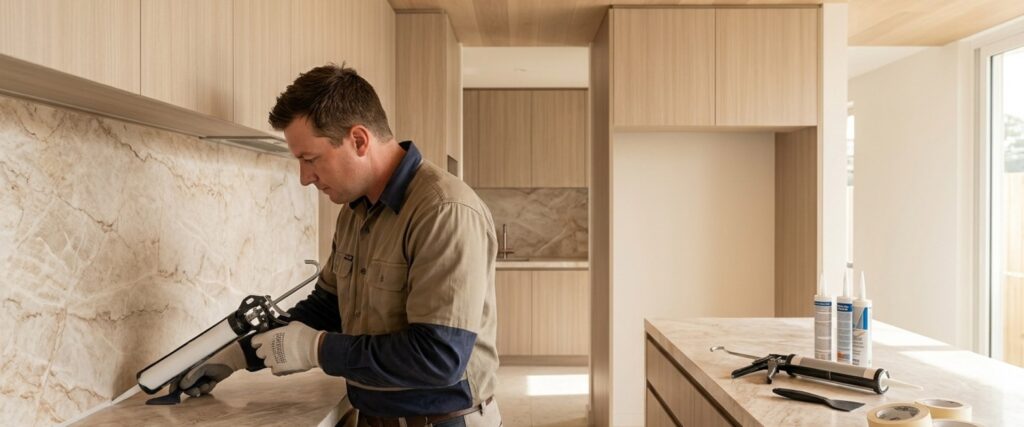
The joint between the benchtop and splashback tiles is a classic failure point. Steam from cooking and boiling water creates localised high-humidity microenvironments that attack caulking from above. Laundry tubs and washing machine connections are equally vulnerable, affecting Sydney homeowners surviving humidity.
Windows and Doors
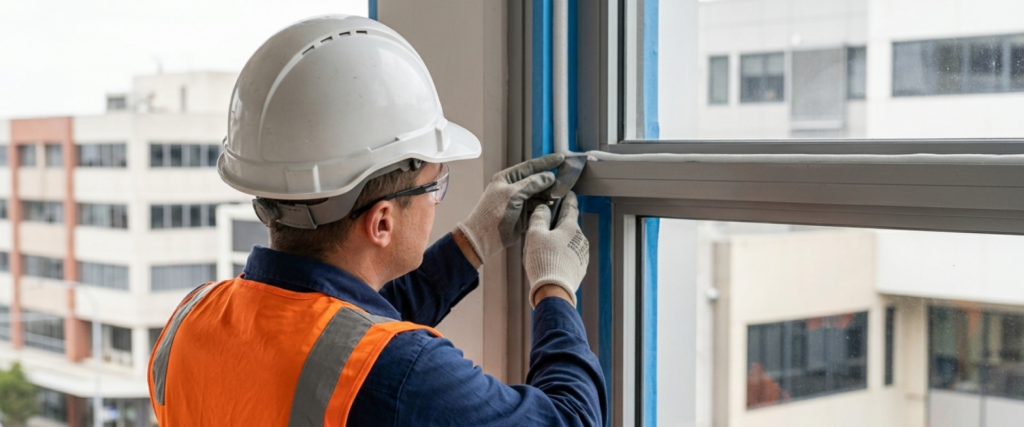
External window and door frames are your home’s frontline defence against weather. In Sydney, the combination of driving rain from nor’easters and persistent humidity means these seals work harder than almost anywhere else in Australia. Check both the external perimeter seal and the internal architrave-to-wall junction, crucial for Sydney homeowners surviving humidity.
Exterior Cladding and Roofline
Where different cladding materials meet — brick to timber, render to aluminium, flashing to tiles — caulking bridges the gap. Failed exterior caulking allows bulk water entry into wall cavities, which in Sydney’s humidity won’t dry out naturally. The result is often hidden timber rot that goes undetected for years, a major concern for Sydney homeowners surviving humidity.
DIY vs Professional Caulking: Making the Right Call
There’s a time and place for a weekend DIY caulking project, and there’s a time to call in the professionals. Knowing the difference saves both money and headaches for Sydney homeowners surviving humidity.
When DIY Makes Sense
Minor touch-ups to interior trim caulking in dry areas, re-sealing a small section of kitchen splashback, or refreshing the caulk around a bathroom vanity are all reasonable DIY projects for a handy homeowner. These tasks require minimal preparation, standard tools, and a steady hand for Sydney homeowners surviving humidity.
When You Need a Professional
- Full bathroom or shower recess re-caulking where waterproofing integrity is at stake
- Exterior window and door perimeter sealing, especially on multi-storey homes
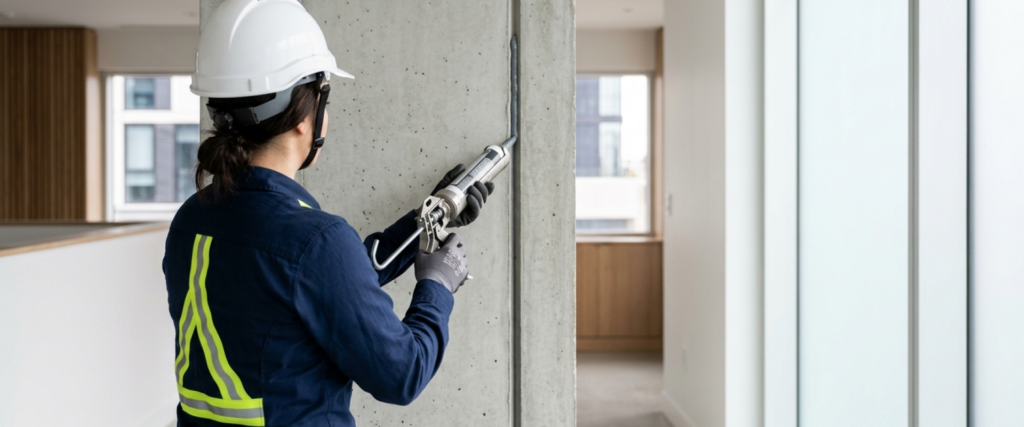
- Expansion joint renewal on concrete driveways, balconies, or retaining walls
- Any application where substrate preparation (removal of old sealant, priming, backer rod installation) is required
- Warranty-backed work for investment properties, strata buildings, or insurance purposes, providing peace of mind for Sydney homeowners surviving humidity
Professional caulking isn’t just about applying a bead of sealant. It’s about correct joint design, surface preparation, product selection, and application technique — all of which determine whether the seal lasts two years or twenty, a key factor for Sydney homeowners surviving humidity.
Maintaining Your Caulking Through Sydney’s Seasons
Even the best caulking installation benefits from regular maintenance. A simple seasonal routine can dramatically extend the life of your seals and catch problems early, helping Sydney homeowners surviving humidity.
Your Seasonal Maintenance Checklist
- Spring (September–November): Inspect all exterior caulking after winter rains. Look for any separation, cracking, or water staining near sealed joints. Clean bathroom caulking with a mould-inhibiting spray, crucial for Sydney homeowners surviving humidity.
- Summer (December–February): Check for UV damage on north- and west-facing exterior seals. Ensure bathroom exhaust fans are functioning to reduce internal humidity load on wet-area caulking.
- Autumn (March–May): Ideal time for re-caulking projects — moderate temperatures and lower humidity allow optimal sealant cure times. Inspect window seals before the wet season, benefiting Sydney homeowners surviving humidity.
- Winter (June–August): Monitor for condensation patterns around windows and door frames. Persistent condensation in the same location often indicates a failed seal beneath, a common issue for Sydney homeowners surviving humidity.
Keeping a simple photo log of your caulking condition each season makes it easy to spot gradual deterioration that might otherwise go unnoticed, assisting Sydney homeowners surviving humidity.
For further information, see business.gov.au and the Australian Building Codes Board.
Frequently Asked Questions
How often should caulking be replaced in a Sydney home?
As a general rule, wet-area caulking (bathrooms, kitchens, laundries) should be inspected annually and typically requires replacement every 5–8 years in Sydney’s humidity. Exterior caulking may last 8–15 years depending on the product used and the level of UV and weather exposure. However, if you notice any signs of cracking, mould, or separation, don’t wait — address it immediately to help Sydney homeowners surviving humidity.
Can I just caulk over old caulking?
This is one of the most common mistakes homeowners make. Applying new caulking over old, deteriorated sealant almost never works. The new layer won’t bond properly to the degraded surface beneath, and any moisture already trapped behind the old caulking will continue causing damage. Old caulking must be completely removed, the surfaces cleaned and prepared, and fresh sealant applied to clean substrate for a lasting result for Sydney homeowners surviving humidity.
What’s the best type of caulking for Sydney bathrooms?
For Sydney bathrooms, a high-quality neutral-cure silicone with built-in fungicidal additives is the best choice. Look for products specifically labelled for wet-area use and rated for mould resistance. Avoid acrylic-based sealants in any bathroom application — they simply cannot withstand the sustained humidity levels common in Sydney homes, making it harder for Sydney homeowners surviving humidity.
Does failed caulking really cause that much damage?
Absolutely. What begins as a small gap or crack in caulking can lead to significant water ingress over time. In Sydney’s humid climate, moisture that enters wall cavities or subfloor areas doesn’t dry out easily. We regularly see cases where a $200 re-caulking job, if done on time, would have prevented $5,000–$15,000 in mould remediation, timber replacement, or waterproofing repairs for Sydney homeowners surviving humidity.
How long does professional caulking take to cure in humid weather?
Cure times vary by product, but in Sydney’s humidity, expect silicone sealants to skin over within 30–60 minutes and reach full cure in 24–72 hours. High humidity can actually slow the curing process for some sealant types, which is why professional applicators often schedule work during moderate conditions and ensure adequate ventilation during the curing period for Sydney homeowners surviving humidity.
Visit Australian Caulking Experts Today
Whether you’re dealing with cracked bathroom seals, leaking window frames, or want a full home caulking assessment before the wet season, our Sydney-based team is ready to help Sydney homeowners surviving humidity.