Caulking curing times determine how long a sealant needs before it can safely bear paint, cladding fixings, water contact or foot traffic, and getting this wrong is one of the most common causes of avoidable rework on Sydney construction programmes. A sealant that looks set on the surface can still be soft underneath, and disturbing it before it fully cures leaves gaps, tears or adhesion failures that undo the entire application. This matters most on sites juggling multiple trades in tight sequence, where a painter, cladder or tiler arriving a day too early can push a joint straight back to square one.
Key Takeaways
- Silicone, polyurethane and MS polymer sealants each have distinct skin, tack-free and full-cure timeframes that affect scheduling differently.
- “Dry to touch” is not the same as fully cured — full cure can take several times longer than surface skinning.
- Temperature, humidity and joint depth all shift curing times and should be factored into any programme.
- Painting, cladding fixing or water exposure before full cure is one of the most common causes of caulking rework on Sydney sites.
- Building curing allowances into the trade sequence from the start avoids costly delays and re-mobilisation later in the programme.
Why caulking curing times matter for site scheduling
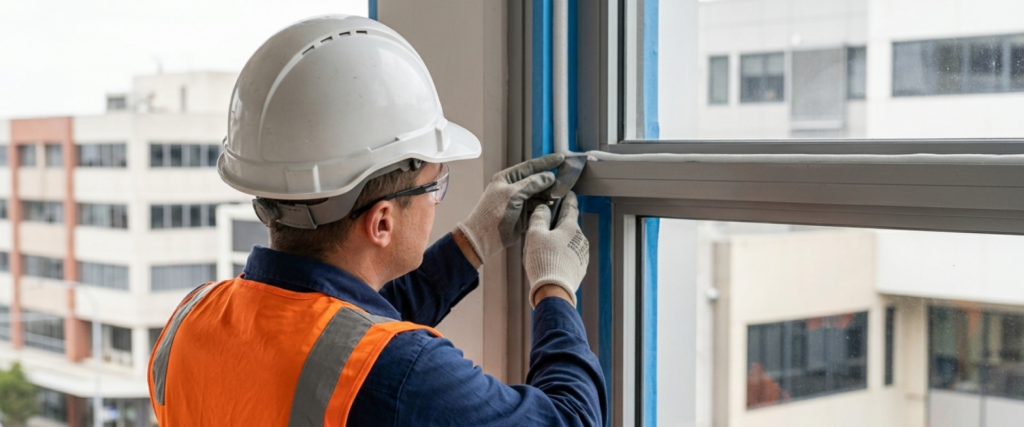
On a construction or renovation programme, caulking is rarely the last trade through. Painters, cladders, tilers and joinery installers typically follow behind the sealing crew, and each of them can compromise a joint that hasn’t finished curing. A painter applying a coat over a still-curing joint risks the paint film cracking as the sealant continues to shrink and move. A cladding installer driving fixings near an uncured facade joint can disturb the bond line before it has developed sufficient strength. Getting the sequence wrong doesn’t just risk cosmetic issues — it can mean stripping and reapplying the sealant entirely, which costs more in labour and delay than allowing the correct curing window in the first place.
For site managers and scheduling coordinators, the practical challenge is that curing times aren’t uniform. Different sealant categories cure at different rates, and the same product can cure faster or slower depending on the day’s conditions. Building a realistic allowance into the programme means understanding both the material and the site environment it’s curing in.
Silicone sealant curing profiles
Silicone sealants typically skin over within 30 minutes to a couple of hours, which is why they can feel deceptively “finished” to anyone walking past. That surface skin is not a reliable indicator of full cure. Silicone cures by reacting with atmospheric moisture, working inward from the exposed surface, so the depth and width of the joint has a direct bearing on how long full cure actually takes. A narrow bead in a bathroom or kitchen application will generally cure faster than a wider external joint, simply because there’s less material for the moisture reaction to reach.
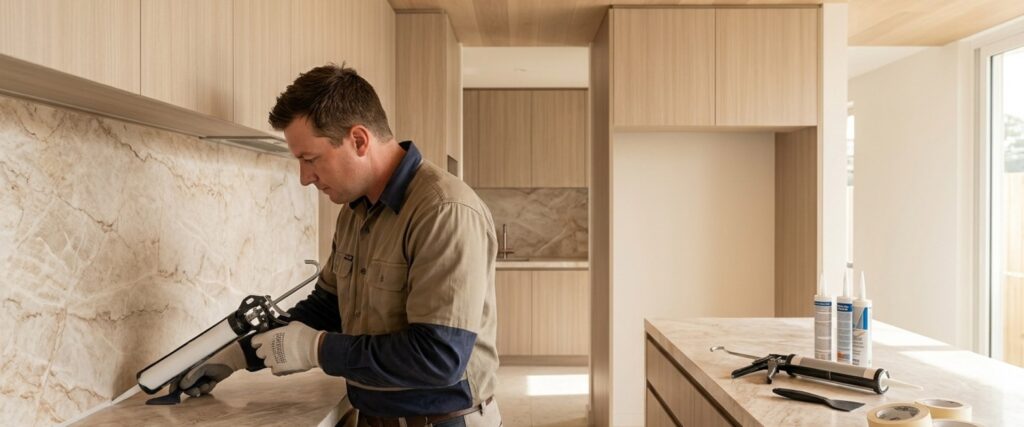
Because silicone is common in internal wet-area work, the practical scheduling risk usually isn’t structural — it’s water and mechanical contact. A shower re-caulked and then used before the sealant has properly cured can fail at the bond line, undoing the reseal. If you’re coordinating a bathroom or kitchen fit-out, our guide to signs bathroom caulk is failing and why professional re-caulking matters covers what early failure actually looks like on site.
Polyurethane and MS polymer curing profiles
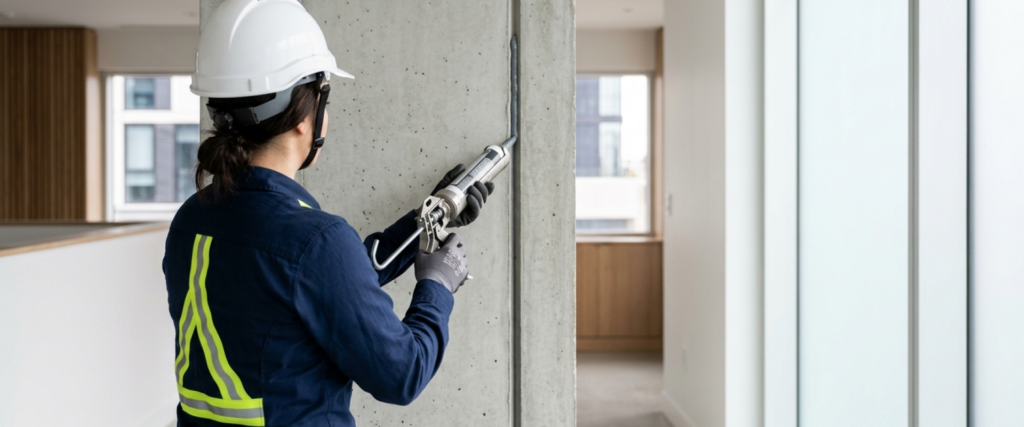
Polyurethane and MS polymer sealants are more commonly specified for external, structural and movement-joint applications precisely because of how they cure and perform under load once set. Like silicone, they cure via moisture reaction from the surface inward, but their skin-to-full-cure gap tends to run longer, and full cure in a deep or wide external joint can extend well beyond what a site programme might assume from the skin time alone. This is a critical distinction for expansion and control joints, where the sealant needs to have developed real elastomeric strength before it’s expected to accommodate building movement, wind loading or thermal cycling.
MS polymer sealants are frequently chosen for facade and cladding work because they combine strong adhesion across varied substrates with good movement capability, but the same curing logic applies — the joint needs its full cure window before it’s put to work. Anyone sequencing facade trades benefits from understanding these differences at a material level; our comparison of silicone vs polyurethane vs acrylic sealant breaks down which sealant category suits which application and why that choice affects programme planning.
If you’re scheduling a project with multiple trades following behind joint sealing — whether that’s a strata remediation, a new commercial build, or a residential renovation — it’s worth confirming actual expected curing times for the specific sealants being used before finalising trade dates. Australian Caulking Experts works with builders, developers and strata managers across Sydney and can advise on realistic curing windows as part of project planning.
What actually changes caulking curing times on site
Temperature and humidity are the two biggest variables. Moisture-cure sealants need atmospheric humidity to react, so a dry Sydney summer day can slow cure at the surface, while humid conditions can accelerate it — but the relationship isn’t linear, and very high humidity or very low temperatures can both push curing times out further than a standard data sheet estimate. Joint geometry matters just as much: a deep joint cures from the outside in, so a bead sized correctly for the substrate movement will always take longer at its core than its skin suggests. Ventilation and direct sun exposure on an external elevation can also affect how evenly a joint cures across its length, particularly on a facade with mixed sun and shade through the day.
A joint that looks cured on site is often only cured on the surface — the trade sequence has to plan for the material underneath, not just what’s visible.
This is one of the reasons a generic “24 hours and it’s ready” rule doesn’t hold up across a real construction programme. The correct allowance depends on the specific sealant used, the joint size, and the conditions on the day of application — which is exactly the kind of detail worth confirming with the caulking contractor at the point of installation, rather than assumed from a product label.
Sequencing follow-up trades correctly
The safest approach for a site manager or scheduling coordinator is to treat caulking curing time as a fixed dependency in the programme, not a flexible buffer that can be compressed if the schedule tightens elsewhere. That means confirming the expected cure window for each joint type before locking in dates for painters, cladding installers, tilers or handover cleaning. On commercial and strata projects, where multiple trades are often mobilised in quick succession to hit a completion date, this coordination step is easy to skip under pressure — and it’s the step that causes the most rework when it’s skipped.
Where a project involves distinct sealant types across different areas — internal wet-area silicone alongside external facade MS polymer, for example — the curing allowance should be set per area rather than applied uniformly across the whole site. A commercial fit-out with concurrent internal and external caulking scopes may reasonably clear internal trades for re-entry sooner than external cladding trades, simply because the joint sizes and sealant types differ. Coordinating this correctly is part of what makes commercial caulking scheduling more involved than a single-trade residential job.
Remedial and defect scenarios add another layer
Remedial caulking — stripping out failed sealant and reapplying — carries its own scheduling considerations, because the substrate condition after removal can affect how the new sealant beds and cures. A joint that’s been reopened for defect rectification needs the same curing discipline as a first-fix application, and rushing the follow-up trade back in after remedial work risks repeating the original failure. If you’re managing a defects programme with multiple remedial joints across a building, our piece on remedial caulking and restoring aged joints covers what’s typically involved in that kind of rework, including why a rushed follow-up sequence undermines the fix.
Fire-rated caulking adds a further consideration on commercial and multi-residential projects. Passive-fire sealing needs to cure fully before it can be relied upon as part of the building’s compliance envelope, so scheduling inspections or sign-off before the manufacturer’s cure window has elapsed can create compliance timing issues on top of the practical ones. Coordinating fire-rated joint curing against inspection dates is worth raising directly with your caulking contractor when the programme is being set.
Frequently Asked Questions
How long does caulking take to cure before painting?
Cure time before painting depends on the sealant type, joint size and site conditions on the day. Surface skinning happens much faster than full cure, and painting too early can cause the paint film to crack as the sealant continues to move underneath. Confirm the expected window with your caulking contractor for the specific product and application used.
Is silicone sealant fully cured once it’s dry to touch?
No. “Dry to touch” usually only means the surface has skinned over. Full cure happens from the outside of the joint inward as the sealant reacts with atmospheric moisture, and a wider or deeper joint takes longer to cure all the way through than the surface suggests.
Do external facade joints take longer to cure than internal joints?
Generally yes, because external joints are often wider and deeper to accommodate building movement, and they’re exposed to variable temperature, humidity and sun conditions that can affect the curing rate across the joint.
Can follow-up trades work near a joint before it’s fully cured?
It depends on the trade and the type of contact involved. Fixings, mechanical contact or water exposure before full cure can disturb the bond and cause the joint to fail, so it’s safer to treat the manufacturer’s cure window as a fixed part of the programme rather than a flexible buffer.
Does humidity affect how fast caulking cures?
Yes. Most sealants used in caulking cure via a reaction with atmospheric moisture, so humidity and temperature both influence the rate of cure. Very dry or very cold conditions can extend curing times beyond a standard estimate.
Who should confirm curing times for a construction programme?
The caulking contractor carrying out the work is best placed to confirm expected curing times for the specific sealant and joint conditions on your project, since this varies by product, joint size and site environment.
Building Curing Time Into Your Project Programme
Caulking curing times aren’t a fixed number that applies uniformly across every project — they depend on the sealant category, the joint size, and the conditions the work is carried out in. Treating cure time as a genuine scheduling dependency, rather than something to compress when the programme tightens, is what protects the quality of the finished joint and avoids costly rework further down the line.
For site managers and scheduling coordinators working across multiple trades, the practical takeaway is to confirm curing windows with the caulking contractor early, before follow-up trade dates are locked in, and to treat internal and external scopes separately given their different sealant types and joint conditions.
Australian Caulking Experts has been sealing residential, commercial and industrial projects across Sydney since 2016, working alongside builders, developers and strata managers on programmes where trade sequencing matters.