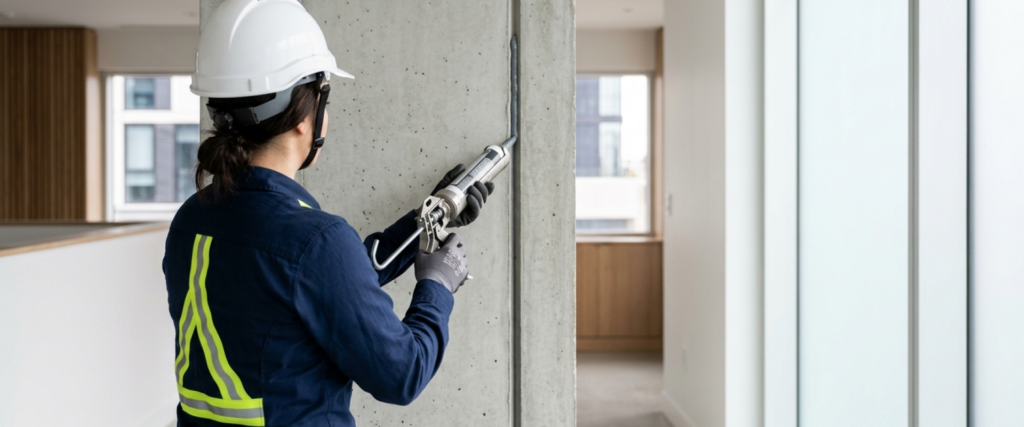
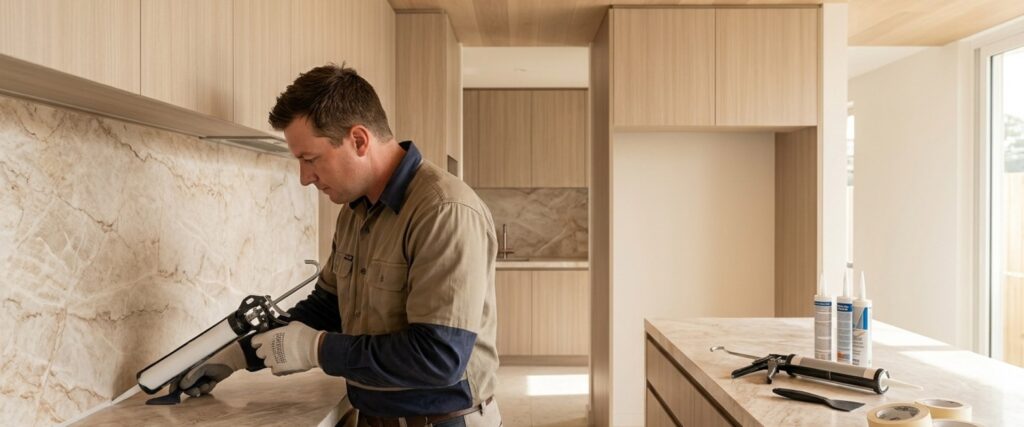
Cladding sealant failures follow a predictable pattern: joints crack or lose adhesion first at movement joints, panel corners and junctions with windows and doors, and once that failure is visible from the ground it usually means the sealant has already stopped performing — at that point the right move is to bring in caulking contractors for a proper inspection rather than wait for the next scheduled maintenance pass. For builders, developers and project managers running facade installations across Sydney, catching these failure points early is the difference between a scheduled remedial pass and a defects claim. This article covers where cladding sealant typically fails first, what causes it, and when it’s time to bring in caulking contractors rather than leave it to the next maintenance cycle.
Key Takeaways
- Cladding sealant most often fails first at panel joints, corners and penetrations, where movement is greatest.
- Common early signs include cracking, chalking, shrinkage gaps and sealant pulling away from the substrate.
- UV exposure, thermal movement and poor original substrate preparation are the main causes of premature failure.
- Fire-rated joints in multi-storey cladding need particular attention, as failed fire seals affect compliance, not just appearance.
- Engaging experienced caulking contractors for a facade inspection early avoids larger remedial works and defects disputes later.
Where Cladding Sealant Fails First
Cladding sealant rarely fails uniformly across a facade. It fails at the points carrying the most stress — and those points are predictable if you know what to look for.
Panel-to-panel joints are usually first, particularly where cladding sheets meet at corners or changes in plane. These joints absorb the most differential movement between panels as the building expands and contracts, so the sealant bead here works harder than anywhere else on the facade. Window and door frame perimeters are a close second — the junction between a rigid frame and a cladding substrate is a common weak point, especially where the original sealant bead was applied too thin or without adequate backing rod. Expansion and control joints, penetrations for services, and junctions where cladding meets render or masonry are the other recurring locations.
If you’re assessing an existing building, start at these points rather than doing a blanket visual sweep of the whole facade. It’s a faster way to find where the sealant is genuinely at risk, rather than areas that simply look weathered.
The Early Signs of Sealant Deterioration
Sealant failure is progressive, and there’s usually a window between the first visible signs and a joint that’s fully open to water and air movement.
Look for hairline cracking along the bead, which typically shows up first at corners and direction changes. Chalking or a powdery surface texture indicates UV degradation of the sealant’s surface layer. Shrinkage — where the bead has visibly pulled back from one or both sides of the joint, leaving a gap — is one of the clearest signs that adhesion has failed rather than just the surface ageing. Discolouration and a change from flexible to brittle when pressed are also worth noting during any facade walk-through.
None of these signs are unusual for a facade several years into its life, but the rate at which they appear matters. Sealant failing within the first two to three years on a new build points to a preparation or product issue, not just normal ageing, and that’s a different conversation with the builder or supplier than a facade reaching the end of a normal sealant life cycle.
The joints holding a facade together are also the first place it starts coming apart — which is exactly why they need checking before they’re visibly broken.
If you’re managing a facade approaching handover, a defects period, or a strata-reported issue, get in touch with Australian Caulking Experts on 1300 941 683 for a facade assessment and quote.
What Causes Premature Facade Sealant Failure
A few recurring causes explain most of the early failures project managers ask us about.
Substrate preparation is the most common one. Sealant needs a clean, dry, properly primed surface to bond — if the original install skipped priming or applied sealant over dust, laitance or old residue, adhesion failure is only a matter of time, sometimes months rather than years. UV exposure is unavoidable on north- and west-facing elevations and gradually breaks down surface flexibility, which is why sealant selection for exposed elevations needs to account for expected sun load, not just budget. Thermal movement is the other major factor — cladding systems expand and contract with temperature swings, and if the joint width and sealant depth weren’t sized for that movement during the original install, the bead will be working outside its designed movement capability from day one. For a closer look at how sealant choice affects long-term performance, see our guide on choosing the right caulk for a Sydney project.
These causes matter because they change the remedial approach. A UV-degraded bead on an otherwise sound joint can often be stripped and resealed. A joint that was never sized correctly for movement needs a proper reassessment of joint width and backing rod before resealing, not just a like-for-like replacement.
Why Fire-Rated Joints Need a Different Level of Attention
On multi-storey and commercial cladding systems, some joints are fire-rated to meet a specified NCC/BCA requirement, and a failed fire-rated seal is a compliance issue that needs addressing on its own terms. These joints need to be identified and treated separately from standard external caulking, since the sealant system, joint depth and installation method are all specific to achieving the required fire performance. If a facade has known fire-rated joints, any remedial caulking scope should confirm which joints are fire-rated before work starts, not after. Our guide to fire-rated caulking and NCC/BCA compliance covers this in more detail for builders managing compliance-sensitive projects.
This is one of the clearer reasons defects and maintenance work on commercial and residential apartment buildings should go to a contractor who understands fire-rated systems specifically, rather than treating all cladding joints as interchangeable.
Deciding Between Routine Maintenance and Calling in Caulking Contractors
Not every sign of sealant ageing needs an immediate contractor visit, but a few triggers should move it up the priority list. Visible gaps or sealant that has fully separated from one side of a joint mean the joint is no longer sealed, regardless of how it looks from a distance. Cracking that’s spreading rather than static, sealant failing on a building less than five years old, and any deterioration near fire-rated joints all warrant a proper assessment rather than a wait-and-see approach.
For builders and project managers, the practical trigger is often a defects period inspection or a strata request following a maintenance report. In either case, getting an experienced set of eyes on the facade before the issue is written into a defects notice or handed to the next contractor gives you more control over scope and cost. Our team has worked across a range of project types — you can see examples of completed work on our projects page, including facade and remedial work at sites such as Mosman and Vaucluse, Sydney.
What a Remedial Caulking Scope Should Actually Cover
Once a decision is made to act, the scope matters as much as the timing. A proper remedial caulking scope starts with stripping the failed sealant back to a clean substrate, not simply applying a fresh bead over the top of degraded material — overcoating a failing joint masks the problem for a short period without addressing why it failed. The substrate is then reassessed for contamination and joint width before a compatible sealant is selected and reapplied with correct backing rod and joint depth.
This is also the point to check whether the original joint sizing matched the movement the cladding system actually experiences, since resealing a joint that was undersized for movement in the first place will fail again on a similar timeline. Our remedial caulking service is built around this full strip-and-reseal approach rather than a surface-level top-up, and covers both residential and commercial facades.
Frequently Asked Questions
How often should cladding sealant be inspected on a commercial building?
There’s no single fixed interval that suits every facade — it depends on elevation exposure, cladding type and the original installation quality. A practical approach is to include a joint inspection as part of routine building maintenance and to bring in caulking contractors for a closer assessment if any of the early warning signs described above are visible.
Can failed sealant be repaired, or does it always need full replacement?
It depends on the extent and cause of the failure. Localised UV degradation on an otherwise sound joint can often be addressed with a strip and reseal of that section. Widespread adhesion failure or joints that were undersized for movement generally need a fuller remedial scope rather than a spot repair.
Is failed sealant on a fire-rated joint urgent?
Any deterioration on a fire-rated joint should be assessed properly rather than left for a routine cycle, given its role in the building’s fire-rating compliance. Get in touch with our team to have fire-rated joints checked as part of any facade assessment.
Do builders or strata managers usually organise this work?
Both do, depending on the building’s stage. Builders typically manage it during the defects liability period, while strata managers commission it once a building is under strata management and an owner or maintenance report flags an issue.
What’s the difference between remedial caulking and standard external caulking?
External caulking generally refers to new sealant applications on a fresh or unsealed joint. Remedial caulking specifically addresses existing, failed sealant — it includes stripping the old material and reassessing the joint before resealing, which standard external caulking on a new install doesn’t require.
How do I get a quote for facade remedial caulking?
Contact Australian Caulking Experts on 1300 941 683 with details of the building and the issues observed, and our team can arrange an assessment and provide a quote based on the actual scope of work required.
Keeping Facade Sealing on the Maintenance Radar
Cladding sealant failure is rarely sudden — it shows up gradually at the same joints, corners and penetrations on nearly every facade, which makes it one of the more predictable maintenance items on a building. The challenge is usually not knowing what to look for, but making time to look before it becomes a defects notice or a strata complaint.
For builders, developers and project managers overseeing facade installations across Sydney, building a periodic sealant check into the maintenance schedule — and treating fire-rated joints as a distinct priority — keeps small issues from becoming larger remedial jobs.
If your facade is due for an assessment, or you’re managing a defects period and want an experienced read on the joints in question, contact Australian Caulking Experts on 1300 941 683.